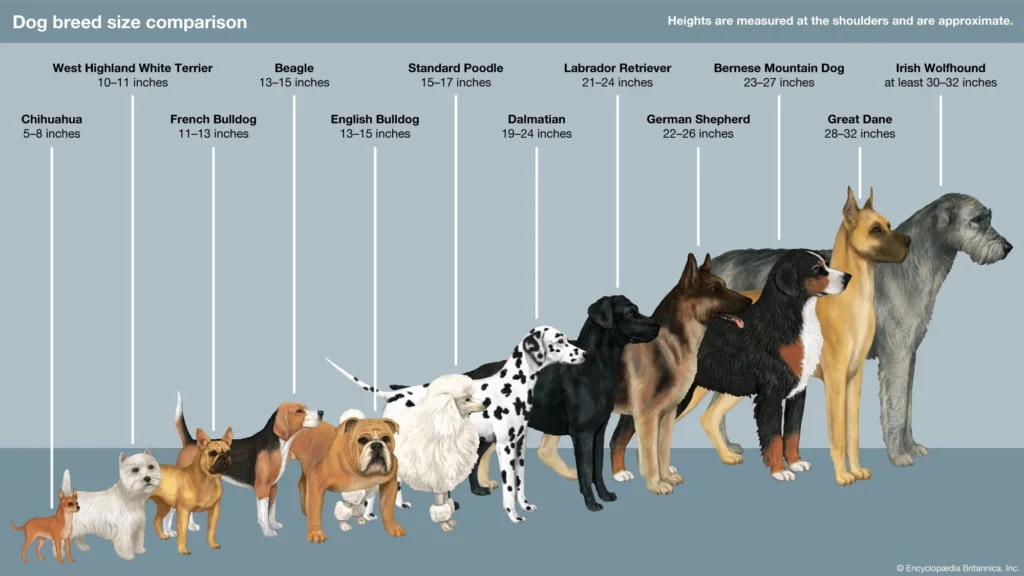
Dogs come in a multitude of sizes, from tiny teacup breeds to gigantic gentle giants. Understanding the size of a particular dog breed can help potential dog owners make informed decisions about which breed might fit best with their lifestyle, living situation, and personal preferences. This comprehensive dog breed size chart guide aims to provide an in-depth analysis of dog breed sizes, categorized into different groups for easy understanding.
Understanding Dog Breed Sizes
Dog breeds are generally categorized into several size groups based on their weight and height. These categories include toy, small, medium, large, and giant. Each category encompasses a range of breeds, each with unique characteristics and care requirements.
Toy Breeds
Toy breeds are the smallest group, typically weighing less than 12 pounds. These breeds are known for their petite size, making them ideal for apartment living or for those who prefer a smaller companion. Despite their size, toy breeds often exhibit vibrant personalities and are full of energy.
- Chihuahua: Weighs between 2-6 pounds and stands about 6-9 inches tall. Known for their big personalities in a small package, Chihuahuas are loyal and alert.
- Pomeranian: Weighs 3-7 pounds and stands 6-7 inches tall. Pomeranians are fluffy, energetic, and often exhibit a curious and inquisitive nature.
- Yorkshire Terrier: Weighs around 7 pounds and stands about 7-8 inches tall. These dogs are known for their silky coats and feisty temperament.
Small Breeds
Small breeds generally weigh between 12-25 pounds. They are slightly larger than toy breeds and can be ideal for those who want a portable but slightly more robust companion.
- French Bulldog: Weighs 16-28 pounds and stands 11-12 inches tall. Known for their bat-like ears and friendly disposition, they make excellent companions.
- Cavalier King Charles Spaniel: Weighs 13-18 pounds and stands 12-13 inches tall. These spaniels are affectionate, gentle, and great with children.
- Pug: Weighs 14-18 pounds and stands 10-12 inches tall. Pugs are known for their wrinkled faces and sociable nature.
Medium Breeds
Medium breeds weigh between 25-50 pounds. This category is quite diverse, offering a range of temperaments and energy levels, making it suitable for various family dynamics.
- Bulldog: Weighs 40-50 pounds and stands 14-15 inches tall. Bulldogs are known for their loose, wrinkled skin and gentle demeanor.
- Basset Hound: Weighs 40-65 pounds and stands 14 inches tall. Basset Hounds are known for their droopy ears and excellent sense of smell.
- Cocker Spaniel: Weighs 20-30 pounds and stands 13.5-15.5 inches tall. They are friendly, energetic, and thrive on companionship.
Large Breeds
Large breeds weigh between 50-90 pounds. These dogs often require more space and exercise, making them well-suited for active families or those with larger homes and yards.
- Golden Retriever: Weighs 55-75 pounds and stands 21.5-24 inches tall. Known for their friendly and tolerant attitudes, Golden Retrievers are great family pets.
- Labrador Retriever: Weighs 55-80 pounds and stands 21.5-24.5 inches tall. Labradors are outgoing, even-tempered, and highly trainable.
- Boxer: Weighs 65-80 pounds and stands 21.5-25 inches tall. Boxers are playful, energetic, and make excellent guard dogs.
Giant Breeds
Giant breeds typically weigh over 90 pounds. These dogs are impressive in stature and often have gentle dispositions. They require significant space and resources but are known for their loyalty and calm nature.
- Great Dane: Weighs 110-175 pounds and stands 28-34 inches tall. Known as gentle giants, Great Danes are friendly and affectionate.
- Mastiff: Weighs 120-230 pounds and stands 27.5-30 inches tall. Mastiffs are dignified, protective, and make excellent family guardians.
- Saint Bernard: Weighs 120-180 pounds and stands 26-30 inches tall. Saint Bernards are known for their patience and gentle disposition.
Factors Influencing Dog Size
Several factors can influence a dog’s size, including its breed, genetics, diet, and overall health. Understanding these factors can help dog owners manage their pet’s growth and maintain a healthy weight.
Genetics
Genetics play a crucial role in determining a dog’s size. Each breed has specific genetic markers that dictate its growth patterns, size, and weight. While individual dogs may vary slightly, most will fall within the breed’s standard size range.
Nutrition
A dog’s diet is fundamental to its growth and development. Puppies require a balanced diet with the right nutrients to ensure healthy growth. Overfeeding or underfeeding can lead to health issues and affect the dog’s size and weight.
Health and Exercise
Regular exercise and routine veterinary care are essential for maintaining a dog’s healthy weight and overall well-being. Exercise helps prevent obesity, which can lead to various health problems and affect a dog’s size.
Choosing the Right Size for Your Lifestyle
When choosing a dog breed, it’s essential to consider how their size will fit into your lifestyle and living situation. Here are some factors to consider:
Living Space
Smaller breeds are generally more adaptable to apartment living, while larger breeds may need more space to roam and exercise. Consider the available space in your home and how it will accommodate the dog’s size and activity level.
Activity Level
Some breeds, regardless of size, have higher energy levels and require more exercise. Ensure you have the time and resources to meet the exercise needs of your chosen breed.
Family Dynamics
Consider how a dog will fit into your family. Some breeds are better suited for families with young children, while others may prefer a quieter environment.
Conclusion
Understanding the different dog breed sizes and their specific needs is crucial for potential dog owners. By considering factors such as living space, activity level, and family dynamics, you can select a breed that fits seamlessly into your life. Whether you’re drawn to the diminutive charm of a toy breed or the majestic presence of a giant breed, there’s a perfect dog out there for everyone. With this comprehensive dog breed size chart guide, you can make an informed decision and find a loyal companion that will bring joy and love to your home.
#ChatGPT assisted in the creation of this article.